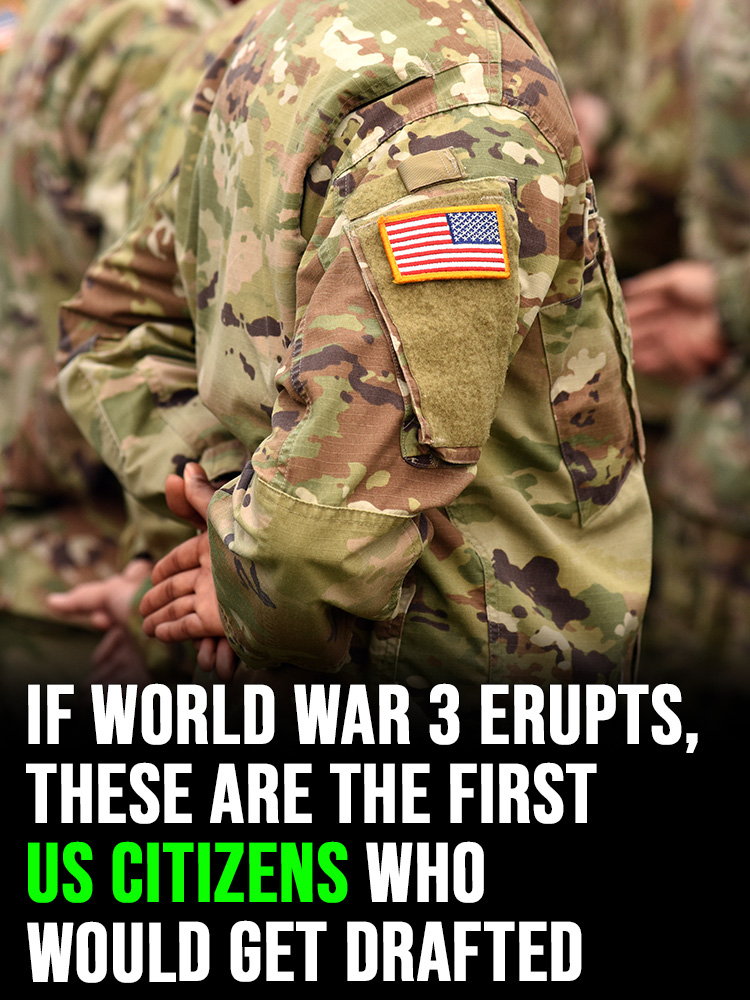
If World War 3 Erupts, These Are the First U.S. Citizens Who Would Be Drafted
For decades, the idea of a military draft has lived in the background of American life—rarely discussed, often misunderstood, and frequently dramatized by movies and social media. Whenever global tensions spike, one question resurfaces almost immediately:
The short answer is: there is a legal system already in place that determines exactly how this would happen. The long answer is far more complex—and far less dramatic—than most people think.
This article breaks down how a U.S. draft actually works, who would be called first, who would not, and why a World War 3 draft would look very different from past wars.
First, an Important Reality Check
Before diving into draft order, it’s crucial to understand this:
The U.S. does not currently have an active draft
Congress would have to authorize one
The President alone cannot reinstate the draft
Even in a global war, a draft is not automatic
In other words:
A World War 3 scenario does not automatically mean millions of Americans are being drafted overnight.
How the U.S. Draft System Actually Works
The Selective Service System (SSS)
The Selective Service System is an independent federal agency responsible for maintaining a database of people who could be drafted if necessary.
Currently, most male U.S. citizens and male immigrants aged 18–25 are required by law to register.
Registration does not mean enlistment. It simply means your name exists in a database if Congress authorizes a draft.
Who Is Required to Register?
As of now, registration applies to:
Male permanent residents (green card holders)
Male refugees, asylum seekers, and undocumented immigrants
Ages 18–25
Women are not currently required to register, though this has been debated in Congress.
Step One of a Draft: The Lottery
If Congress and the President authorize a draft, the first step would be a national draft lottery, similar to what was used during the Vietnam War.
How the Lottery Works
Birthdates are randomly drawn
Each date is assigned a number
Lower numbers are called first
The order determines who gets examined and processed first
This system exists to avoid favoritism or selective targeting.
The First Americans Who Would Be Drafted
If a draft were activated today, the first group called would almost certainly be:
Men aged 18–20
Not 25-year-olds. Not older millennials. Not people in their 30s.
Historically and legally, the draft prioritizes young adults for several reasons:
Physical resilience
Lower injury risk
Longer potential service time
Faster training adaptability
Draft Priority Order by Age (Most Likely)
Age 20
Age 19
Age 18
Age 21
Age 22–25
This order is not arbitrary—it is written into Selective Service planning documents.
Physical and Mental Screening Comes Next
Being called in a lottery does not mean you are immediately sent to war.
Those selected would undergo:
Medical examinations
Psychological evaluations
Background checks
Skill and aptitude testing
Historically, a significant percentage of draftees are disqualified for medical or mental health reasons.
Common disqualifiers include:
Chronic illnesses
Serious vision or hearing impairment
Certain psychiatric conditions
Physical disabilities
Severe asthma or heart conditions
Education and Occupational Deferments
Unlike the Vietnam era, educational deferments today would likely be extremely limited.
However, critical occupations would matter.
People working in roles vital to national survival could be deferred, such as:
Power grid technicians
Cybersecurity specialists
Medical professionals
Nuclear plant operators
Critical infrastructure engineers
A modern war would rely heavily on technology and logistics, not just infantry.
Who Would Not Be Drafted First
Despite popular fear, many groups would be very low priority or exempt.
People Unlikely to Be Drafted Early
People over 26
Women (under current law)
Parents with sole custody
People with serious medical conditions
Active-duty service members (already serving)
National Guard members (already assigned roles)
The draft is designed to fill gaps, not duplicate existing forces.
Continue reading…
