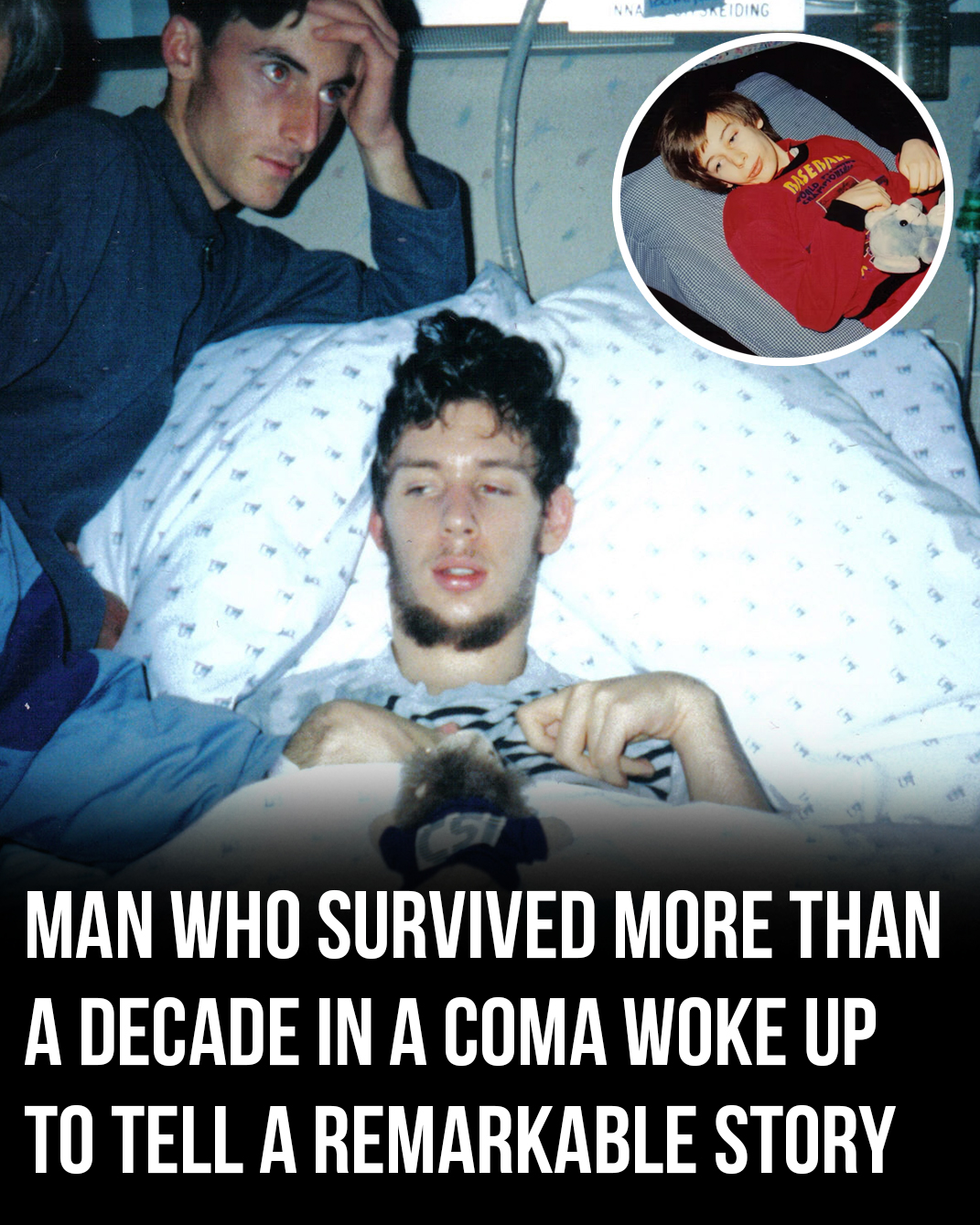
“Ghost Boy”: The Harrowing Tale of a Mind Trapped in Silence
Martin Pistorius’s story begins in Johannesburg, South Africa, in the late 1980s, when he was an ordinary, curious 12‑year‑old boy with a passion for gadgets and the typical interests of youth. But one ordinary day, his life took an unforeseeable and devastating turn. What initially seemed like a routine sickness rapidly evolved into an unexplainable neurological collapse—a descent so profound that doctors and his family believed he would never regain consciousness.
The journey from boy to “ghost,” and eventually to a man with a voice, is one of tragedy, endurance, heartbreak, and ultimately, triumphant recovery.
1. The First Descent: When a Boy’s Life Changed Forever
At age 12, Martin began feeling unwell—what started as a sore throat and flu‑like symptoms soon spiraled into something far worse. Doctors struggled to pinpoint the cause, and despite treatment for suspected illnesses like cryptococcal meningitis or related neurological infections, his condition deteriorated. Over months, he progressively lost his ability to walk, speak, make eye contact, eat independently, and control his movements. Eventually, medical professionals concluded he had entered a coma‑like vegetative state with almost no chance of meaningful recovery.
Doctors told Martin’s parents, Rodney and Joan, that their son had the cognitive functioning of a three‑month‑old infant and advised them simply to keep him comfortable. There was no hope of improvement—it was, in their clinical view, a life already lost.
Within the family, the burden grew immense. Rodney and Joan took on the around‑the‑clock physical care of their son. Every morning, Rodney would wake at 5 a.m. to dress Martin and take him to a care center; in the evening he would bathe, feed, and put him to bed. They rotated his position every couple of hours to prevent bedsores. This routine went on for 12 years—through seasons of hope, despair, and sheer relentless care.
Yet even as they cared for him physically, no one suspected that his consciousness was not gone, only hidden.
2. Waking Up Inside: The Silent Return of Awareness
Martin later described what followed not as a single moment of awakening but a gradual process—a slow, dawning realization that he was still alive, perceiving, and trapped within his own body. It was not a sudden “switch” from unconsciousness to awareness; rather, after a couple of years in a vegetative state, his inner world began to reassemble itself piece by piece.
“I often say it was like being a ghost,” he later recounted. “You can hear, see and understand everything around you, but you have absolutely no power over anything… It is like you don’t exist.”
He was aware of the daily routines around him, from the care staff repositioning his body to the repetitive television programs played for patients. One of the more poignant details in many recountings of his experience is that he grew to loathe being made to watch hours of children’s TV shows, particularly Barney. This became something of a mental focus point—the bane of his existence—but also, in a twisted way, a marker of time as he endured.
Imagine, for years, knowing everything but communicating nothing. That was Martin’s reality: fully conscious but completely immobilized, his mind active while the outside world assumed him gone.
3. The Emotional Weight of Isolation
The psychological toll of this trapped existence was profound. Martin experienced intense loneliness, profound despair, and a sense of utter isolation. He was present, but no one knew.
He listened to family and caregivers discuss his condition as if he weren’t there. He overheard his mother confessing in exhaustion and anguish, “I hope you die”—words that seared into his consciousness not as cruelty, but as an expression of desperation and helplessness.
Over time, he internalized his circumstances, battling thoughts that he would never be understood, never return to life as a participatory human being. In the deepest stretches of his locked‑in world, he whispered to himself that there was nothing left but silence and unconscious thought.
Martin’s dramatic internal transformation went unnoticed for many years. That’s partly because his condition outwardly appeared frozen: no movement, no speech, no responsive blinking—nothing observable to suggest awareness.
But around his mid‑20s, something shifted—not dramatically, but subtly. A caregiver named Virna van der Walt, specializing in augmentative and alternative communication, began to notice tiny, barely perceptible responses: fleeting smiles, brief glances, slight gazes, and almost deliberate facial movements.
These faint signals were enough to prompt further testing using specialized communication tools. To everyone’s astonishment, the assessments confirmed what Martin had known all along: he was fully aware and cognitively intact.
This discovery transformed his life.
5. Learning to Speak Again: Technology as a Lifeline
With confirmation of his cognitive awareness, the next step was communication. Martin was introduced to a computer with specialized communication software that could interpret eye movements, blinks, and gaze patterns to help him formulate words and sentences.
Through intensive therapy, practice, and patience, Martin learned how to:
Indicate letters and words with eye movements
Spell out thoughts, phrases, and eventually full sentences
Use a speech synthesizer to express his inner voice in audible language
This technological mediation gave him a voice for the first time in over a decade. Suddenly, the boy who had lived for years in silent captivity could tell people what had been in his mind all those years.
6. Reconnecting with the World
As Martin’s ability to communicate solidified, so did his capacity to rebuild a life. He did not regress into the isolated shell of his earlier years; instead, he started forming meaningful connections again.
One of the most remarkable developments was his relationship with his future wife, Joanna. They met in the 2000s after he had begun communicating, and their bond grew strong enough that they married in 2009. Joanna’s presence brought not just companionship but a shared sense of humanity, acceptance, and mutual respect—a stark contrast to the isolation of Martin’s earlier life.
Through communication and social reconnection, Martin began to experience life anew—shopping during Christmas for the first time, enjoying simple pleasures like candy floss, and gradually participating in the world around him.
7. A Voice Through Words: Ghost Boy
Martin documented his incredible journey in a memoir titled Ghost Boy: My Escape from a Life Locked Inside My Own Body. In the book, he not only recounts the timeline of his physical and neurological journey but also delves into the emotional, psychological, and philosophical landscape of his experience.
In Ghost Boy, he discusses:
The nature of consciousness and identity
The agony of being unheard and unseen
The resilience of hope even in utter silence
The complex emotions surrounding family love, guilt, and forgiveness
What it truly means to reconnect with life after years of absence
The book became a powerful testimony to human endurance and awareness, offering insights not just into Martin’s personal story but also into the nature of consciousness, neurological diagnosis, and the underestimated potential of individuals presumed lost.
8. Understanding Locked‑In Syndrome
Martin’s condition is now widely understood in medical literature as a form of locked‑in syndrome, a rare neurological disorder in which a person is fully conscious but completely unable to move or communicate due to paralysis of nearly all voluntary muscles.
Locked‑in syndrome can be caused by various factors, including:
Brain injuries
Stroke
Diseases affecting motor neuron pathways
Severe infections or damage to brainstem structures
What distinguishes it from coma or vegetative states is awareness: in many coma diagnoses, the patient is thought to be unconscious or unaware of surroundings. In locked‑in syndrome, by contrast, patients are awake and aware but trapped inside a body that won’t respond.
9. Beyond the Individual: Impacts on Family and Medicine
Martin’s story is not only a personal journey but also a mirror reflecting how medicine, family, and society understand consciousness and care.
For His Family
For Rodney and Joan Pistorius, the experience was a grueling emotional odyssey. In interviews, his mother has spoken openly about her guilt, exhaustion, and the unbearable emotional toll of caring for a son they believed was gone. Her confession of despair—such as telling him she hoped he would die—was not cruelty, but rather a raw glimpse into how heartbreaking such caregiving can become when all hope seems lost.
Continue reading…
