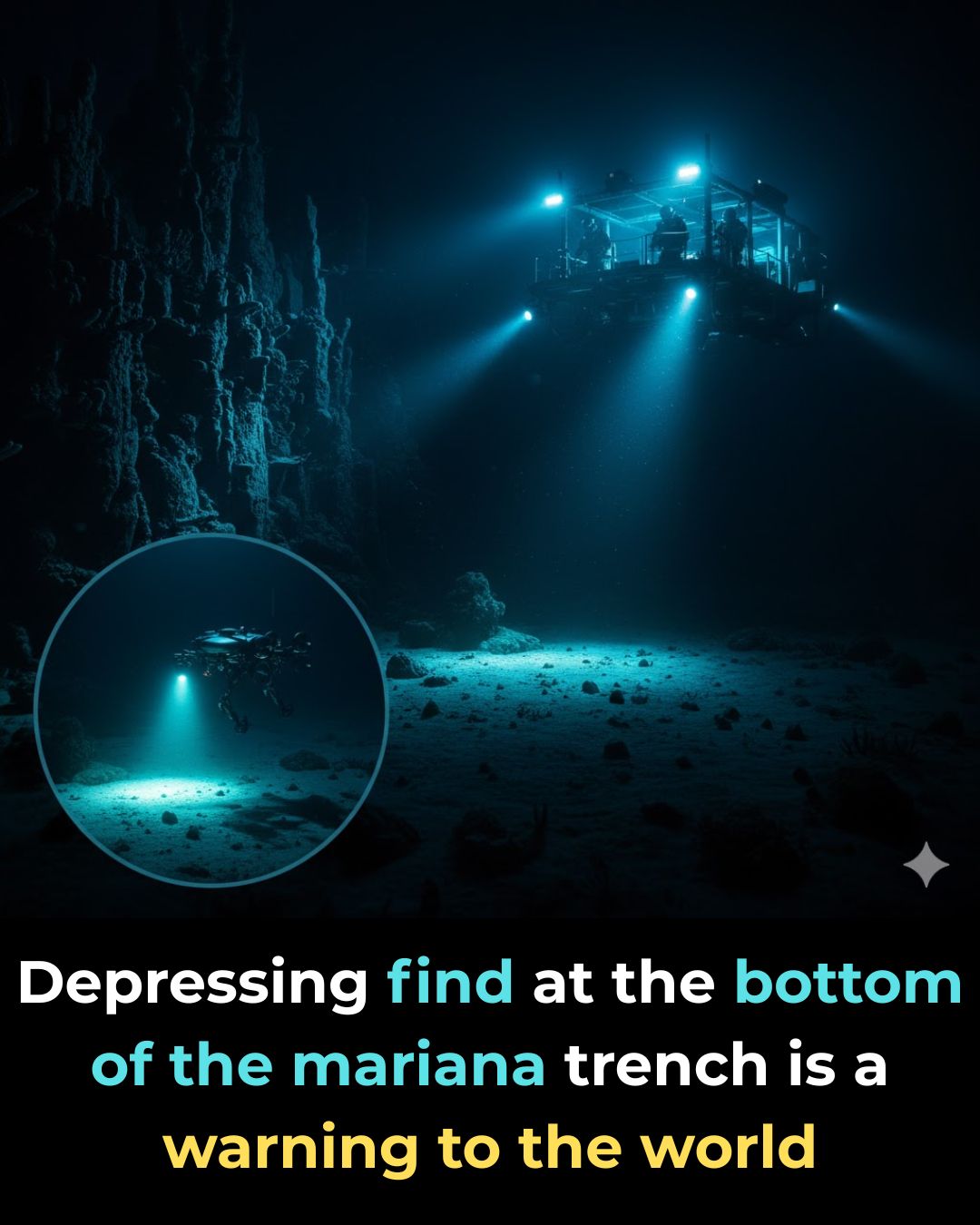
A Warning from the Deep: Plastic and Pollution at the Bottom of the Mariana Trench
Introduction: The Abyss Beneath the Waves
Far beneath the crashing surface of the Pacific Ocean lies a place so remote, so alien, that its true depths were unknown to humanity until the mid‑20th century. The Mariana Trench, located in the western Pacific between Japan and Papua New Guinea, is the deepest known point in Earth’s oceans — plunging nearly 11 kilometers (about 7 miles) beneath the surface into perpetual darkness, crushing pressure, and cold so intense it tests the limits of life itself.
For decades, scientists and explorers regarded the deepest trenches as pristine, unreachable realms — places where sunlight never penetrates, where few creatures survive, and where the imprint of humans from the surface might never reach. The trench wasn’t just remote; it was symbolic — the ultimate frontier of Earth’s final unexplored wilderness.
The Discovery That Shocked the World
In 2019, explorer Victor Vescovo, a retired naval officer and private equity investor, embarked on a mission that would change how we see the deep ocean. As part of the Five Deeps Expedition, Vescovo piloted a specially designed titanium‑hulled submersible to the deepest known point in the Challenger Deep, the lowest part of the Mariana Trench. What he saw was both remarkable and heartbreaking.
Amid sightings of previously unknown sea creatures — including strange crustaceans and deep‑sea fish adapted to the crushing pressure — he also found something manmade: a plastic bag resting on the ocean floor, and what appeared to be candy wrappers.
This wasn’t a piece of wood or seaweed that might have drifted naturally — this was plastic, the same material that litters streets and beaches around the world. And it had made its way to a place more than 36,000 feet (nearly 11 km) beneath the waves — the very bottom of the deep sea.
Continue reading…
