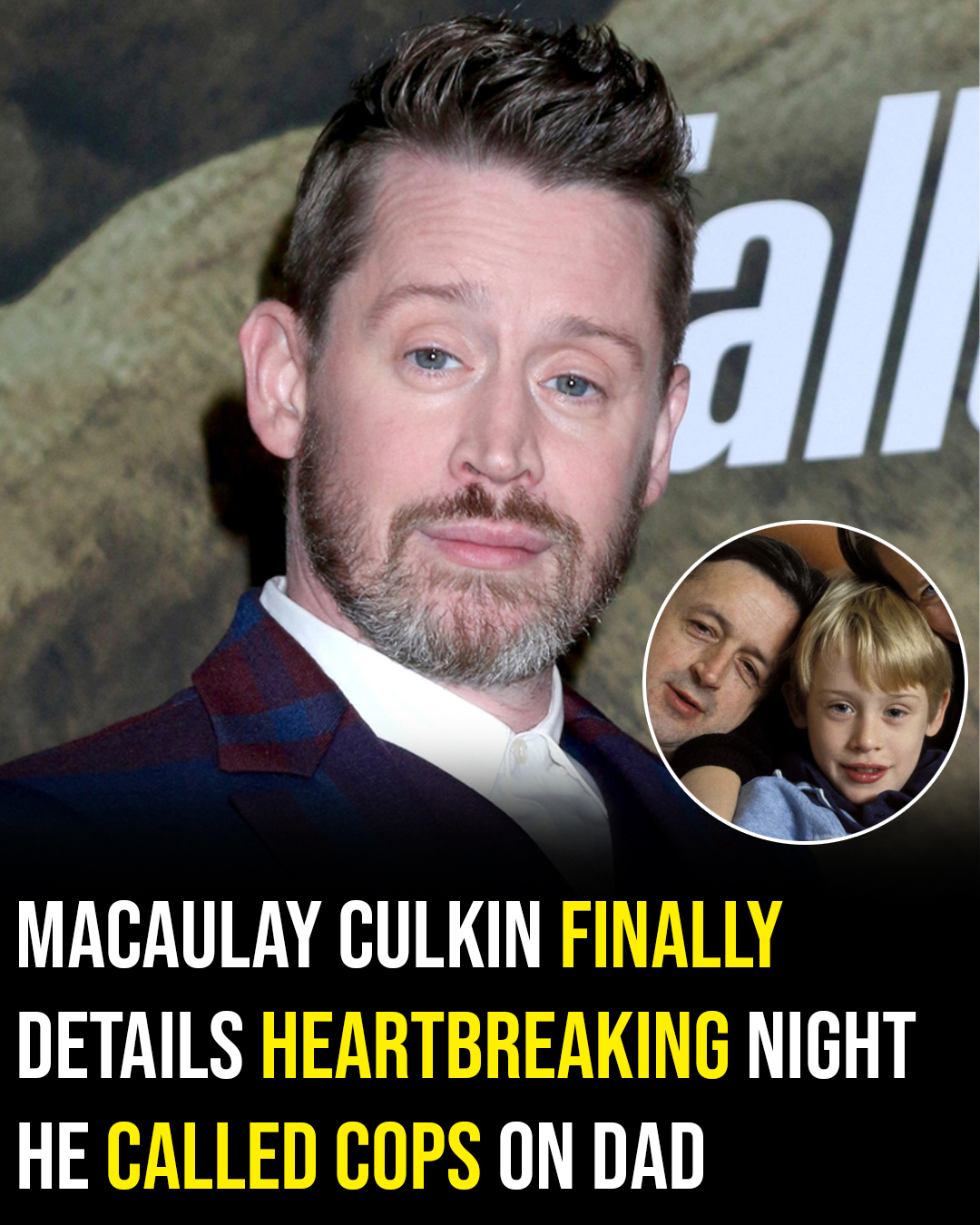
Macaulay Culkin’s Story: From “Home Alone” to Calling the Cops on His Father
A comprehensive account of Macaulay Culkin’s difficult childhood, burgeoning stardom, and the night he said he called police on his own father — and what it reveals about fame, trauma, and adulthood.
I. The Boy Behind the Iconic Face
Macaulay Culkin became one of the most recognizable child actors in film history with the 1990 holiday classic Home Alone. In that role, he played Kevin McCallister — an ingenious, resourceful kid accidentally left home alone who defends his house from bungling burglars. The film was an international hit and transformed the young Culkin — barely ten years old at the time — into a global star almost overnight.
Culkin was born on August 26, 1980 in New York City, the third of seven children to Christopher “Kit” Culkin and Patricia Brentrup. Although his father had some experience as a stage performer, the family struggled financially before his son’s success. After Macaulay began booking major roles, his income dramatically changed the family’s circumstances — but also the dynamics within it.
II. From Humble Beginnings to Hollywood Cash Cow
As his career took off, Culkin’s earnings soared. Major films like Uncle Buck, My Girl, Home Alone, and Richie Rich made him one of the highest‑paid child actors of the early 1990s.
Behind the scenes, Culkin’s father managed his career, controlling contracts, appearances, and finances, something many parents do for child actors. But according to Culkin’s accounts in later years, this arrangement came with serious emotional and physical cost.
In some of his more candid interviews (including a 2018 Marc Maron podcast and other public statements), Culkin described a difficult relationship with his father. He portrayed Kit as controlling, resentful, and at times abusive — physically and mentally — often driven by jealousy over achievements he himself had not attained.
Culkin often said things like:
“He was a bad man… he was abusive, physically and mentally — I can show you all my scars if I wanted to.”
These remarks, shared years after his childhood, reveal a deeper emotional backdrop to his early success — one that combined fame with family conflict.
III. The Breakpoint: The Night He Called the Police on His Father
Among Culkin’s revelations about his childhood, one moment stands out for its severity and symbolism: the night he reportedly called the police on his own father.
Here’s how Culkin described the events:
-
Culkin had been away for a weekend trip and returned home without notifying his father.
-
Upon his return, his father became angry and slapped him — “a nice swipe across the cheek,” Culkin said.
-
His father demanded he get up. Culkin, recognizing the pattern of abuse, refused to fight back — knowing that was exactly what his father wanted.
-
His father struck him again. At that point, Culkin withdrew, locked himself in a room, and called the police.
-
He later said his motivation wasn’t vengeance but to show that he wouldn’t tolerate that behavior anymore.
This moment, coming from a child still under his father’s authority, is striking — and it revealed a side of child stardom that rarely made headlines at the time. The interview was conducted long before the later wave of child‑actor trauma narratives that emerged in the 2010s and 2020s.
IV. Beyond the Police Call: Custody Battle and Emancipation
The traumatic episode did not occur in isolation. Soon after, Culkin’s parents — who never married — split up in 1995 after more than two decades together. This ignited a highly public and contentious custody battle, not just over the children, but also Culkin’s substantial earnings from his career.
During the custody dispute, Culkin discovered the truth about how much money he had earned — something his father had reportedly kept from him by hiding newspaper coverage and financial details. The revelation of his fortune at such a young age contributed to his desire for autonomy over his life and career.
At age 15, Culkin sued his own parents to remove them as his legal guardians, seeking control over his trust fund and career decisions. This case, though not an emancipation in the strict legal sense, effectively achieved a similar outcome: he gained control of his finances and the freedom to shape his own future without parental oversight.
This was a turning point. While many child stars struggle to transition into adult life, Culkin’s legal move allowed him to break from the structure that had dominated his youth.
V. Estrangement and Long‑Term Impact
Over the following decades, Culkin rarely speaks about his father but has been unmistakably clear about where he stands. On multiple occasions — including a 2025 podcast appearance — Culkin reiterated that he and his father have not spoken in more than thirty years and that none of Kit’s children or grandchildren want anything to do with him.
Culkin described his father as narcissistic and abusive, and expressed shock that someone could treat a family that way. His comments reveal the emotional toll of his childhood and how it shaped him as an adult and a parent.
Reflecting on the past, Culkin has noted:
“He deserves it, too. He’s a man who had seven kids and now he has four grandkids, and none of them want anything to do with him.”
This level of estrangement speaks to deep and unresolved wounds — ones that extend beyond fame and into the fundamentals of family dynamics.
VI. From Trauma to Fatherhood
After stepping away from acting as a teenager, Culkin lived a life largely outside mainstream Hollywood for many years. In adulthood, he found stability and happiness with fellow actor Brenda Song, with whom he shares two sons. His perspective on fatherhood contrasts sharply with his own upbringing.
Culkin often speaks about wanting to break cycles and be present and emotionally engaged with his children — a deliberate choice rooted in the pain of his youth and the absence of parental warmth he experienced. Even in moments where he discusses his youngest child’s enthusiasm for Home Alone, he emphasizes a playful, nurturing dynamic that he never felt as a child.
Becoming a father himself appears to have been transformative. Culkin has described how his own kids helped him reconsider difficult aspects of his past, including complex feelings about events like Father’s Day.
VII. Legacy and Cultural Conversation
Culkin’s revelations — including the night he called the police on his father — have reverberated through broader conversations about child fame and Hollywood. His story challenges the myth of the “carefree child star” and highlights how early fame, unchecked parental control, and emotional abuse can intersect in deeply damaging ways.
Despite the dramatic arc of his early fame and later personal struggles, Culkin’s life today contradicts the stereotypical cautionary tale. He has grounded himself in creative projects, family life, and personal reflection without becoming defined by scandal or self‑destruction — a rare outcome among former child stars.
Continue reading…
