Introduction: A Defining Moment in U.S.–Venezuelan Maritime Conflict
In late 2025 and early 2026, the United States military executed a series of unprecedented high‑profile maritime operations involving the capture or seizure of foreign‑flagged vessels in the broad region linked to Venezuela — including the Caribbean Sea and farther offshore in the North Atlantic Ocean. These events have unfolded against the backdrop of a dramatic escalation of U.S. military force in the Western Hemisphere, culminating in a controversial U.S. military raid that captured Venezuelan President Nicolás Maduro, followed by sanctions enforcement actions targeting maritime networks tied to Venezuelan oil exports.
1. What Happened: Confirmed Vessel Seizures
1.1 The Seizure of the Oil Tanker “Marinera”
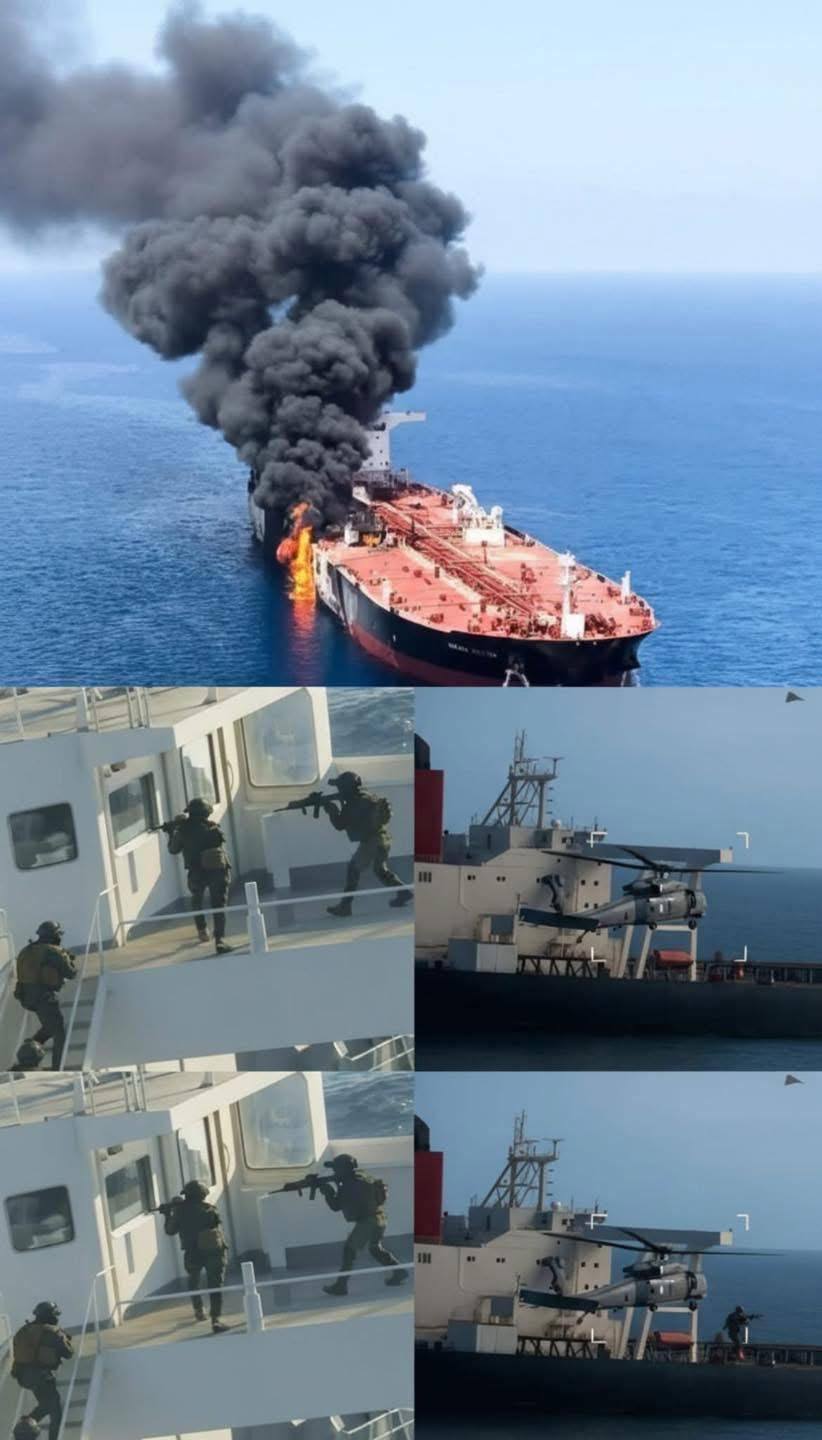
In early January 2026, U.S. military and Coast Guard forces successfully captured a Russian‑flagged oil tanker in the North Atlantic Ocean after a weeks‑long pursuit. The tanker, formerly known as Bella 1 and renamed Marinera, had evaded an earlier attempt to intercept it near Venezuela after a U.S.–imposed blockade of sanctioned Venezuelan oil tankers. According to U.S. European Command, the tanker was seized pursuant to a federal warrant under U.S. sanctions law.
The pursuit spanned weeks and involved maritime patrol assets tracking the vessel from the Caribbean region into the north Atlantic, near Iceland and the United Kingdom’s waters.
U.S. forces boarded the vessel after establishing contact, reportedly without significant resistance, and brought it under control.
Legal justification: The seizure was executed under a U.S. federal court’s warrant, which found cause based on sanctions violations and related maritime law enforcement authorities.
Events like this represent one of the most expansive uses of U.S. military and law enforcement power to control foreign vessels suspected of violating U.S. sanctions — not just in nearby waters but far from the Venezuelan coastline.
1.2 Additional Maritime Interdictions and Seizures
Recent U.S. operations have reportedly led to multiple seizures and interdictions of Venezuelan‑linked vessels, both in the high seas and in the Caribbean Sea — as part of a broader campaign to pressure Venezuela and enforce sanctions:
The U.S. Coast Guard and military assets were heavily involved in enforcing maritime interdictions related to oil exports and sanctions compliance.
These actions have been described by U.S. officials as part of a campaign to dismantle illicit oil shipments from Venezuela and its allies, although the legality and international reception remain highly contentious.
2. Strategic and Political Context
To understand these naval operations, it’s essential to place them within the larger U.S. policy shift toward Venezuela and maritime enforcement.
2.1 Venezuelan Political Crisis and U.S. Military Campaign
In a bold military operation, U.S. special forces (notably Army Delta Force) captured Venezuelan President Nicolás Maduro in early 2026, transporting him to the United States to face federal criminal charges related to drug trafficking and alleged links to criminal groups.
This dramatic action was the culmination of:
A sustained U.S. campaign targeting maritime drug smuggling and “narco‑terrorist networks”, often conducted far from legal traditional counter‑drug patrols.
Public diplomacy framing that Venezuela posed a combined threat of narcotics trafficking and regional destabilization.
The maritime seizures are integrally connected to this broader campaign — enforcing sanctions and crippling Venezuela’s oil exports, which are economically critical to the Maduro regime.
2.2 Venezuela’s Reaction and Regional Backlash
The Venezuelan government and other nations have responded with forceful criticism:
Caracas and Moscow strongly condemned the U.S. seizure of the tanker, calling it illegal under international law and an escalation of tensions — especially since much of the recent operations occurred in international waters.
Venezuela’s foreign ministry argued that the interception violated the principle of freedom of navigation and maritime sovereignty.
This response reflects the deep geopolitical polarization, with Russia — a key Venezuelan ally — framing U.S. actions as aggressive and illegitimate.
3. Legal Dimensions: International and Domestic Law
The seizure and capture of vessels far from U.S. territorial waters raise intricate questions of international maritime law, sanctions enforcement, and jurisdiction.
3.1 Sovereignty, Sanctions, and Freedom of Navigation
Under the United Nations Convention on the Law of the Sea (UNCLOS):
Ships on the high seas enjoy freedom of navigation and liberty from interference by other states — except in narrow exceptions (e.g., piracy, slave trade, unauthorized broadcasting).
Enforcement actions based on unilateral sanctions are not universally recognized as a legal basis for seizure on the high seas, especially when executed by one state against another’s flagged vessel.
The U.S. assertion of a federal court warrant provides domestic legal authority for enforcement — but international acceptance of such authority is not uniform.
3.2 National Security vs. International Norms
From the U.S. perspective:
Seizures are justified under U.S. law aimed at sanctions enforcement and national security.
Continue reading…
