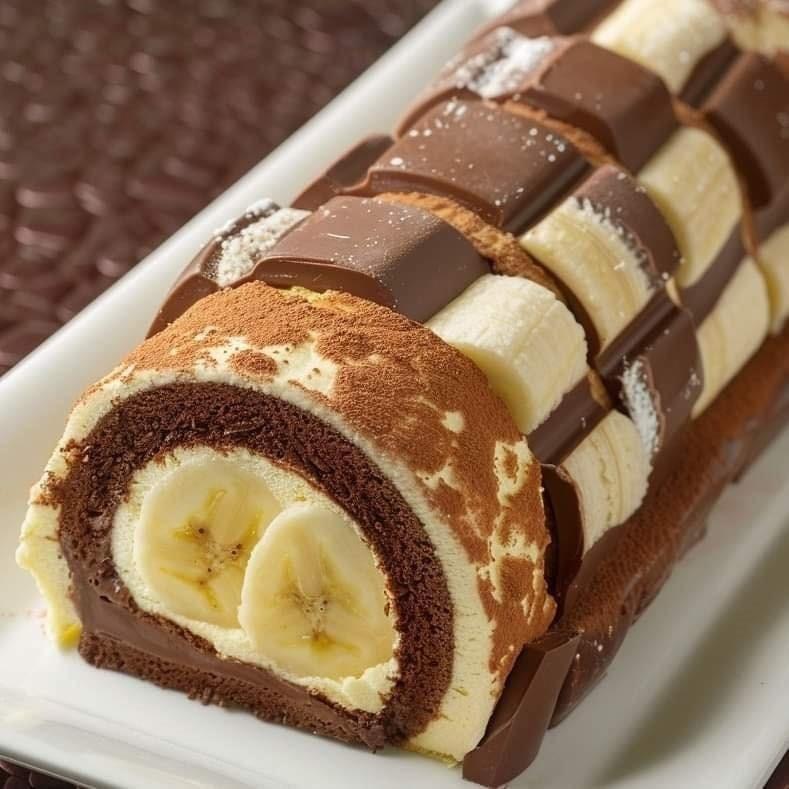
A Love Letter to Elegant Comfort Baking
There are desserts that shout, and desserts that whisper. The banana-filled, chocolate-covered roulade does both. It arrives at the table looking refined and dramatic—glossy chocolate shell, perfect spiral revealed with each slice—but the flavors speak in warm, familiar tones. Banana. Chocolate. Soft sponge. Cream. Comfort dressed in evening wear.
And when you do? It rewards you with one of the most satisfying slices of cake you can possibly make.
What Is a Roulade, Really?
A roulade is, at its core, a rolled sponge cake filled with something soft—cream, ganache, fruit, mousse—and rolled into a spiral while still warm. The technique dates back centuries, appearing in various forms across Europe: Swiss rolls, Bûche de Noël, jelly rolls. The method is simple in theory and unforgiving in execution.
Unlike butter cakes, roulade sponges rely on whipped eggs for structure. There is no chemical leavening here, no safety net. Air is your rising agent. Timing is everything. Temperature matters. Confidence matters.
But don’t let that intimidate you. A roulade is not fragile—it’s responsive. Treat it gently, move decisively, and it will cooperate beautifully.
Why Banana and Chocolate Are Perfect Together
Banana and chocolate is one of baking’s most enduring love stories. Banana brings sweetness, moisture, and a mellow fruitiness that softens chocolate’s intensity. Chocolate, in turn, grounds banana, keeping it from becoming cloying or overly ripe-tasting.
In this roulade, banana isn’t mashed into the sponge like banana bread. Instead, it becomes a structured filling—either sliced fresh bananas nestled into cream, or a silky banana mousse or custard layered evenly throughout. This keeps the flavor clean and pronounced.
It’s architectural. And delicious.
Ingredients Overview (and Why Each One Matters)
For the Sponge Cake
Eggs – The backbone of the cake. They must be at room temperature to whip properly.
Sugar – Provides sweetness and stabilizes the egg foam.
Flour – Low-protein flour keeps the sponge tender.
Cocoa powder (optional) – If you want a chocolate sponge instead of vanilla.
Salt – Enhances everything.
This sponge is intentionally lean. No butter, no oil. Fat would weigh down the structure and make rolling more difficult.
For the Banana Filling
Ripe bananas – Spotty but not collapsing. Flavor matters more than firmness.
Heavy cream – Whipped to soft peaks for lightness.
Cream cheese or mascarpone (optional) – Adds body and slight tang.
Sugar or honey – Sweetens without overpowering.
Lemon juice – Keeps banana flavor bright and prevents browning.
Vanilla or rum – Optional, but lovely.
For the Chocolate Coating
Dark chocolate – Choose something you enjoy eating on its own.
Heavy cream – Creates ganache.
Butter or glucose – Adds shine and smoothness.
The Technique: Where Most People Go Wrong
1. Under-Whipping or Over-Whipping Eggs
You want thick, pale, ribbon-stage eggs. When you lift the whisk, the batter should fall back in ribbons that sit on the surface for a few seconds before disappearing. Under-whipped eggs = dense cake. Over-whipped eggs = dry, brittle sponge.
2. Over-Mixing the Batter
Once flour is added, gentleness is non-negotiable. Use a wide spatula, fold slowly, rotate the bowl. Think of lifting and turning, not stirring.
3. Waiting Too Long to Roll
The sponge must be rolled while still warm. This is crucial. A cold sponge cracks. A warm sponge remembers.
Step-by-Step: Making the Perfect Roulade
Step 1: Prepare the Pan
Line a rimmed baking sheet with parchment paper, leaving an overhang on the long sides. Grease lightly. Dust with cocoa powder or flour.
This parchment is not optional—it is your lifeline.
Step 2: Whip the Eggs
Beat eggs and sugar together until thick, pale, and voluminous. This can take 5–8 minutes in a stand mixer. Don’t rush it.
Add vanilla and salt near the end.
Step 3: Fold in the Dry Ingredients
Sift flour (and cocoa powder, if using) over the egg mixture in batches. Fold gently. Stop the moment you no longer see streaks of flour.
Step 4: Bake
Spread the batter evenly in the pan, smoothing the surface. Bake at 180°C / 350°F for 10–12 minutes, until the cake springs back lightly when touched.
Overbaking is the enemy.
Step 5: Roll While Warm
Lay a clean kitchen towel on the counter and dust it lightly with powdered sugar. Invert the hot cake onto the towel. Peel off parchment.
Starting from the short end, roll the cake up with the towel inside. Let it cool completely in this rolled position.
This trains the cake to hold its shape.
The Banana Filling: Smooth, Structured, Balanced
While the cake cools, prepare the filling.
Whip cream to soft peaks. In a separate bowl, blend cream cheese or mascarpone with sugar, vanilla, and lemon juice. Fold whipped cream into this mixture gently.
Mash bananas lightly or slice them thinly, depending on your texture preference. Fold into the cream just before assembly to avoid excess moisture.
The filling should be thick enough to spread but not stiff.
Assembling the Roulade
Unroll the cooled sponge carefully. It will naturally curl slightly—that’s good.
Spread the banana filling evenly, leaving a small border at the edges. Don’t overfill. More filling does not equal better roulade; it equals leakage.
Re-roll the cake gently but firmly, this time without the towel.
Wrap the roulade tightly in plastic wrap and refrigerate for at least one hour to set.
The Chocolate Coating: A Glossy Finish
Heat cream until just steaming. Pour over chopped chocolate. Let sit for one minute, then stir gently until smooth. Add butter if using.
Allow the ganache to cool slightly until thick but pourable.
Place the roulade on a rack over a tray. Pour ganache over the top, letting it cascade down the sides. Use an offset spatula to smooth if necessary.
Chill briefly to set.
How to Slice Like a Pro
Use a long, sharp knife. Wipe it clean between cuts. Slice decisively, not sawing.
Each slice should reveal a clean spiral, creamy banana center, and thin chocolate shell.
Variations Worth Trying
Peanut Butter Banana Roulade – Swirl peanut butter into the filling.
Caramelized Banana Filling – Sauté bananas briefly with butter and brown sugar.
Milk Chocolate Coating – Sweeter, softer contrast.
Continue reading…
