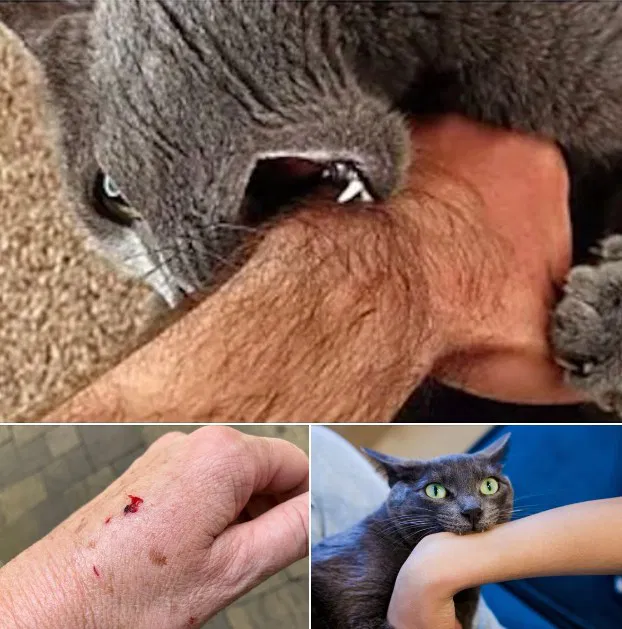
“They may be saying, ‘I’m enjoying this interaction but it’s becoming too much for me. I’m nearing my limit,’” says Samantha Bell, a cat expert from Best Friends Animal Society.
A cat may also give a playful nip when it is hungry, indicating a desire for food. Similarly, loving bites can be a cat’s subtle method of asking for more attention or affection. Rather than a sign of aggressiveness, these nibbles are usually a cat’s method of expressing its wants and strengthening its bond with its owner.
Overstimulation
Fear or stress
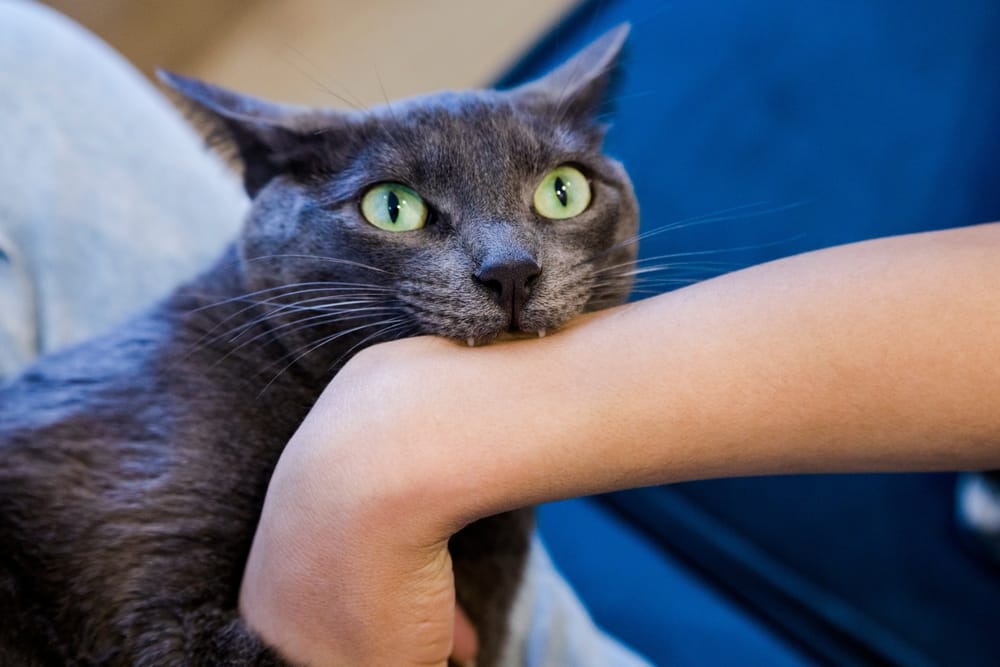
Anyone who has been bitten by a cat will most likely think of this first. And it is a natural protective mechanism for all felines. If a cat feels attacked or terrified, it may bite to protect itself.
Pain or discomfort
Many individuals may be unaware that a cat bite can indicate something more dangerous. If a cat bites you unexpectedly, it could be because of discomfort or sickness. A veterinarian check-up might help rule out any underlying health concerns.
Territorial behavior
Cats are inherently territorial animals, and biting is a common technique for them to express dominance or defend their territory. A cat may bite to defend what they perceive to be their particular territory, which could be their favorite seat on the couch, a prized toy, or even a specific region of the house. This behavior is typically a response to feeling threatened or anxious, demonstrating that cats, like their wild ancestors, have strong instincts to guard their habitat.
