They may technically meet specifications—but barely.
When combined with minor voltage issues or heat, cheap bulbs are the first to die.
8. Seasonal Electrical Load (Why This Happens Around the Holidays)
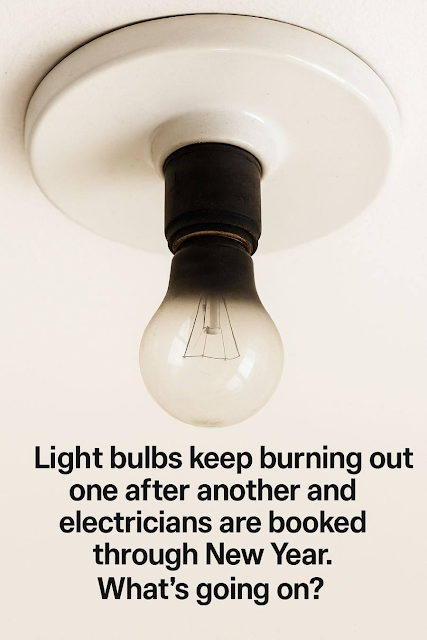
This is the reason electricians are booked solid through New Year.
What Changes in Winter?
Space heaters
Holiday lights
Extra cooking and entertaining
Shorter daylight hours (more lights on longer)
All of this increases demand on both your home’s electrical system and the utility grid.
How This Affects Bulbs
Voltage can creep higher at night
Load imbalance becomes more pronounced
Problems that stayed hidden all year suddenly show themselves in December.
9. Why Multiple Bulbs Fail at Once (The Psychology of “Suddenly”)
Often, bulbs didn’t all fail at the same moment—they just crossed the failure threshold together.
Slight overvoltage shortens lifespan gradually
Heat accelerates wear
One bulb fails, then another, then another
It feels sudden because the underlying stress has been building for months.
10. What You Can Safely Check Right Now
While waiting for an electrician, here are safe, homeowner-level checks:
Same fixtures or different rooms?
Mostly LEDs or incandescents?
Mostly on dimmers?
Do bulbs get unusually bright before failing?
Patterns point to causes.
2. Try One High-Quality Bulb
Install a reputable, long-life bulb in a problem fixture. If it fails quickly too, the issue isn’t bulb quality.
3. Check Fixture Ratings
Continue reading…
