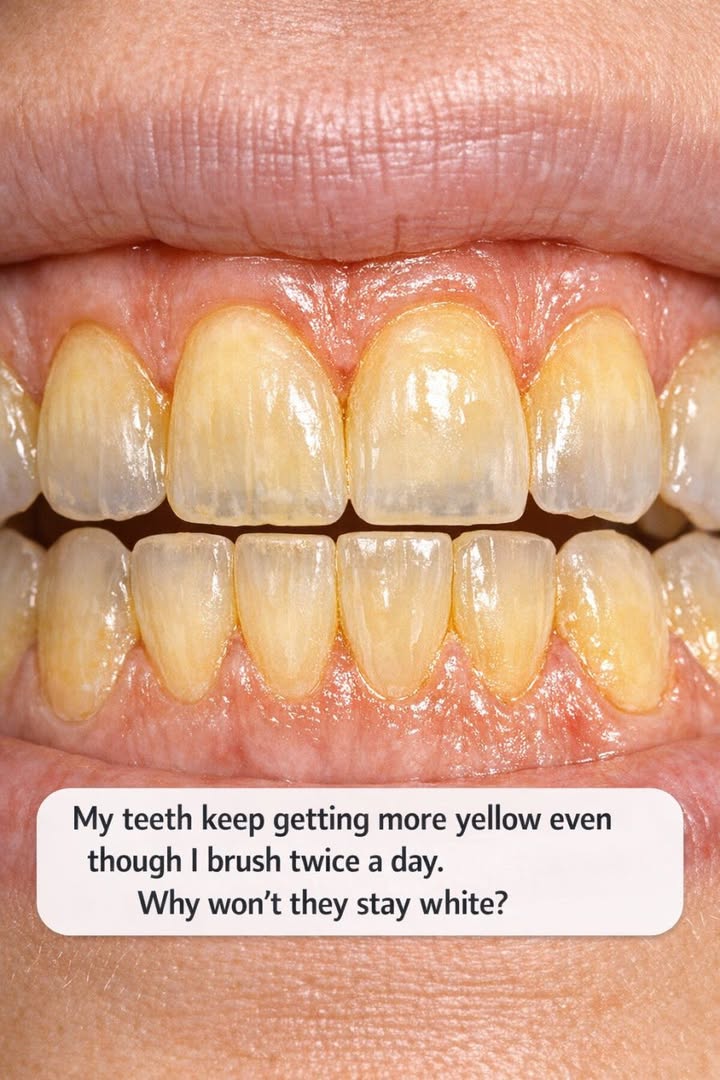
Enamel, the hard outer layer of the tooth, is semi-translucent. The underlying dentin, which is naturally yellowish, can show through, especially if the enamel is thin. Understanding that your natural tooth color might not be pure white can help set realistic expectations for tooth whitening efforts.
2. Enamel Thinning: When the White Outer Layer Wears Away
Enamel thinning is a common cause of teeth appearing more yellow. Over time, the enamel can wear away due to factors such as acidic foods, aggressive brushing, or grinding of teeth. As the enamel thins, the yellowish dentin underneath becomes more visible, giving your teeth a yellower appearance.
On average, enamel is about 2.5 millimeters thick at its thickest point, but this can decrease over time. Protecting enamel by using a soft-bristled toothbrush and avoiding abrasive toothpaste can help maintain its thickness and whiteness.
4. Hidden Culprits in Your Diet: Sauces, Berries, and Acidic Foods
Continue reading…
