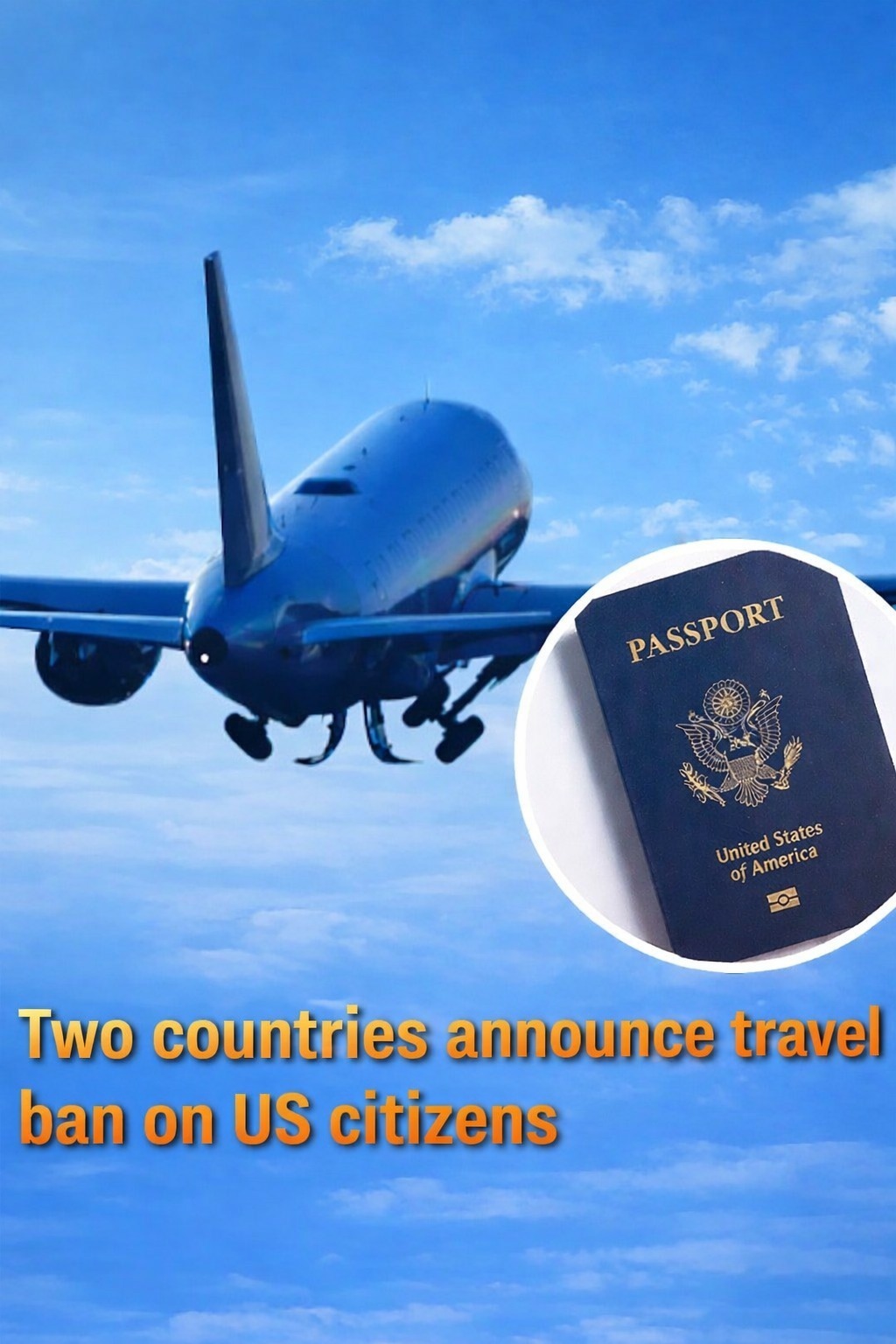
New Travel Restrictions in Two Countries Impact U.S. Citizens
Introduction
Travel policies between nations are constantly evolving, shaped by geopolitics, security concerns, public health, and diplomatic reciprocity. In late 2025 and early 2026, travel restrictions imposed by the United States on certain foreign nationals triggered reciprocal actions by Mali and Burkina Faso — two West African nations that now restrict entry to U.S. citizens. These shifts represent a notable development in international travel and diplomatic relations, with significant consequences for citizens of all three countries, global mobility, and broader geopolitics.
The U.S. travel restriction policies that set the stage for retaliation.
What Mali and Burkina Faso have done, and why.
How these policies affect American travelers and bilateral relations.
Economic, legal, and diplomatic impacts.
Broader global reactions and implications.
Practical guidance for U.S. citizens planning travel.
1. Background: The Expanded U.S. Travel Restrictions
1.1 The U.S. Presidential Proclamation
In December 2025, the U.S. issued a new Presidential Proclamation expanding travel restrictions and entry bans on citizens of multiple countries, effective January 1, 2026. This move extended earlier travel bans and added new countries to both full and partial entry suspensions.
Full restrictions were imposed on both immigrant and nonimmigrant visas for nationals of countries including Burkina Faso, Mali, Niger, South Sudan, Syria, and others. Nationals of these countries outside the U.S. who did not hold valid visas could not be admitted.
Partial restrictions limited certain visa categories (e.g., visitor visas, students, temporary workers) for other nations.
This expansion was justified by Washington on national security, border control, and screening capacity grounds. U.S. officials cited issues such as terrorism, insufficient documentation systems, visa overstay concerns, and limited cooperation from home governments. But these explanations were met with skepticism and criticism from affected nations.
1.2 Historical Context
The U.S. travel ban concept is not new. It traces back to earlier restrictive immigration policies and was notably spotlighted in 2017 with the first “travel ban” on several Muslim-majority countries. The renewed December 2025 measure broadens this approach and reflects continuation of restrictive entry criteria under the Trump administration’s immigration policy framework.
The expanded restrictions mark one of the largest travel ban lists in U.S. history, affecting dozens of countries across Africa, Asia, and the Middle East. While some countries are categorized under full bans, others face partial barriers.
2. Mali and Burkina Faso: Reciprocal Travel Bans
2.1 What the Bans Entail
According to official statements from Mali and Burkina Faso:
Mali stopped allowing visas or entry to U.S. citizens. This ban operates under the principle of reciprocity, asserting that U.S. nationals should face the same entry conditions that Americans impose on Malians.
Burkina Faso followed suit, announcing similar restrictions on U.S. passport holders. Its Ministry of Foreign Affairs emphasized the principle of equal treatment in international relations.
Both bans took effect shortly after the U.S. proclamation, effectively closing off travel by Americans for tourism, business, or potentially even certain humanitarian activities, unless special exemptions are negotiated.
2.2 Why Reciprocity Matters
Reciprocity has long been a foundation of diplomatic relations and visa policy. In simple terms, countries often grant visa access and entry privileges based on how they are treated abroad:
If Country A bans or limits citizens of Country B, Country B may retaliate by applying similar restrictions.
This “tit-for-tat” dynamic is meant to signal displeasure at unequal treatment and to force reconsideration of policies that a state views as unfair.
Mali and Burkina Faso’s decisions reflect this logic — by mirroring the U.S. restrictions, they aim to protest the expanded travel bans and pressure Washington to reconsider its stance.
3. Impacts on U.S. Citizens
3.1 Travel Possibilities
For American citizens planning travel:
Travel to Mali and Burkina Faso is now restricted or prohibited for normal tourism or business purposes.
U.S. passport holders may find it impossible to obtain a visa, or at minimum, face severe barriers and uncertainty.
Special cases (e.g., humanitarian missions, diplomatic travel) may require case-by-case negotiations or special clearances, if available at all.
These bans are separate from U.S. State Department travel advisories (which may already caution U.S. citizens against travel to these nations due to insecurity). The reciprocal bans create legal obstacles to entry, not just safety warnings.
3.2 Safety and Consular Support
Mali and Burkina Faso have both faced years of armed conflict, insurgency, and government instability, prompting the U.S. to issue high-level travel advisories (often Level 3 or Level 4 “reconsider travel” or “don’t travel”) even before the bans. For example:
The U.S. State Department previously warned about kidnapping, terrorism, and limited consular support for U.S. citizens in Burkina Faso and Mali.
Limited diplomatic presence in these countries means that American citizens have reduced access to consular resources if emergencies occur abroad.
Thus, the bans compound existing safety concerns with additional legal travel barriers.
3.3 Economic and Personal Impact
For U.S. citizens living in or traveling to these countries, the bans have real consequences:
Business travel is restricted, affecting entrepreneurs, NGO workers, and companies operating regionally.
Personal travel plans may be canceled or postponed indefinitely.
Humanitarian and development workers, who often operate in West Africa, may need to seek alternative arrangements or negotiate special exemptions.
These limitations disrupt people-to-people ties and raise questions about the future of cooperation in areas like development aid and international security.
4. Diplomatic and Geopolitical Consequences
4.1 Strained U.S.–Africa Relations
Mali and Burkina Faso are part of a broader Sahel region grappling with instability, including frequent coups and governance challenges. The U.S.’s decision to expand travel restrictions was perceived by some as punitive toward governments with limited administrative and documentation capacities.
For Mali and Burkina Faso — both governed by military juntas — the bans on U.S. citizens are also statements of sovereignty and resistance to Western policies perceived as coercive. This dynamic could deepen mistrust and complicate diplomatic engagement on shared issues like counter-terrorism and security.
4.2 Regional Repercussions
Other countries have taken related actions:
Niger has reportedly banned U.S. passport holders in response to U.S. restrictions, adding to a trio of West African states enforcing reciprocal entry limits.
These moves reflect broader regional pushback against major powers’ travel and immigration policies.
Such reciprocal bans could become part of a larger geopolitical trend whereby countries use travel policy as a bargaining chip in diplomatic negotiations.
5. Economic Impacts Beyond Borders
While Mali and Burkina Faso are not major destinations for U.S. tourism at the global scale, their bans still have economic effects:
Reduced business travel may slow investment or partnership opportunities.
Organizations reliant on international personnel (NGOs, development agencies) may face higher costs or logistical barriers.
Airlines and service industries lose potential revenue from American passengers.
On the U.S. side, travel policies could indirectly affect sectors reliant on international cooperation, including trade, investment, and cultural exchange programs.
6. Legal and Policy Perspectives
6.1 International Law and Sovereignty
Under international law, states have the sovereign right to determine entry conditions for foreign nationals. There is no automatic obligation to allow entry to any foreign citizen. However:
Reciprocity is not a legal requirement, but a diplomatic practice.
Countries may choose to retaliate to force policy changes, as seen with Mali and Burkina Faso.
These dynamics illustrate the complex intersection of national sovereignty, diplomatic strategy, and global human mobility.
6.2 U.S. Policy Justifications and Criticisms
Proponents of the U.S. restrictions argue that:
Limiting travel from countries that do not adequately secure civil documentation and identity systems enhances border security.
Safeguarding public safety and immigration system integrity is a legitimate government interest.
Critics, however, argue that:
Broad bans catch ordinary travelers, students, and families in their nets.
They may unfairly target entire populations based on factors beyond their control.
The policies risk alienating weaker states and undermine goodwill.
7. Broader Global Context
The travel restrictions between the U.S., Mali, and Burkina Faso are part of a broader global environment of travel policy shifts:
Other countries have issued travel advisories for U.S. destinations due to political unrest and safety concerns. Germany, for instance, recently updated its advice for travelers to the United States in light of domestic protests and clashes.
Conversely, some nations have eased travel barriers for U.S. citizens; Bolivia and Uzbekistan recently lifted visa requirements to encourage tourism.
This mix of easing and tightening illustrates that travel policy is increasingly dynamic, shaped by geopolitics as much as by public health and economics.
8. What U.S. Citizens Should Know
For Americans planning international travel, the evolving landscape underscores several key points:
8.1 Check Official Sources
Before traveling abroad — especially to regions facing political or diplomatic tension — consult:
The U.S. State Department travel advisories.
Embassy or consulate alerts from destination countries.
Factors like political risk, security environment, and visa requirements.
8.2 Understand Legal Barriers
An advisory (“don’t travel”) is different from a legal ban on entry. Countries like Mali and Burkina Faso have now placed entry restrictions that legally block entry for U.S. citizens, which means:
Even if a traveler wanted to go, they might not receive a visa.
Diplomatic or rare exempted travel may be the only avenue.
8.3 Monitor Diplomatic Developments
Continue reading…
