Why This Matters: Radiological Risks and Environmental Security
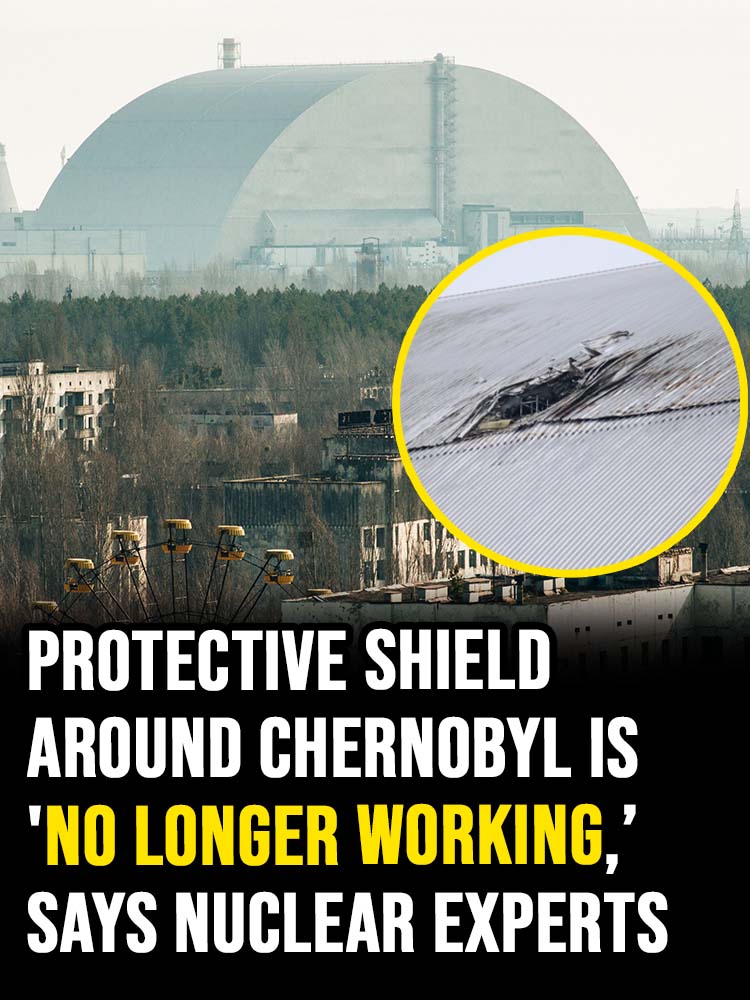
Given that the NSC’s primary purpose is to prevent the escape of radioactive material from the reactor interior, its compromised state raises several serious concerns:
Although radiation levels remain stable today, the damaged structure could allow environmental factors like rain or wind to come into contact with radioactive dust or debris, potentially releasing contaminants over time if not fully sealed again. Experts stress that even without immediate leakage, gradual degradation can lead to future risks.
2. Dangers of Weathering
Without a fully sealed exterior, rainwater infiltration and corrosion could accelerate deterioration from within, raising the likelihood that small amounts of radioactive material could someday escape into the surrounding ecosystem, which includes rivers, forests, and farmland.
3. Challenges for Cleanup and Decommissioning
The NSC was also intended to facilitate safe nuclear decommissioning operations. With its protective integrity weakened, engineers may face greater hazards and limitations in safely dismantling remnants of the reactor and removing highly radioactive materials.
Engineering Complexities: Repairing the Unrepairable?
Restoring the NSC to full operational capacity poses a daunting engineering challenge.
The structure spans over 100 meters in height and 257 meters across — roughly the size of a football field — making repair operations both technically complex and logistically demanding.
In late 2025 and early 2026, preparatory steps began to organize funding and technical planning. The European Bank for Reconstruction and Development (EBRD) and other international partners are reportedly preparing funds and logistics for a full renovation project slated for 2026.
The restoration effort will likely require:
Replacement of damaged steel cladding
Repair of insulation and sealing membranes
Installation of advanced weatherproofing systems
Enhanced radiological monitoring systems
Use of remote robotics to protect workers from high radiation zones
Political and Geopolitical Dimensions
The issue of Chernobyl has become deeply political.
Ukraine has publicly accused Russia of deliberately targeting the nuclear site, framing the attack as evidence of disregard for international norms prohibiting strikes on nuclear infrastructure. Moscow has denied responsibility, as is common in the information war surrounding the broader conflict.
International observers, including the IAEA, have maintained neutrality regarding attribution, focusing instead on the technical facts and nuclear safety implications. Still, the fact remains that modern warfare has brought direct military action into proximity with one of the world’s most dangerous radiological sites, a scenario once thought unlikely in the nuclear safety community.
This development has triggered renewed calls for global norms that protect nuclear sites during armed conflict, echoing principles of international humanitarian law. Experts warn that failing to shield such facilities could set a dangerous precedent for future conflicts.
Voices from the Scientific Community
Nuclear specialists have expressed deep concern about the state of the NSC and the broader implications of its failure.
Shaun Burnie, a senior nuclear expert at Greenpeace, told the media that while there is no immediate cause for panic given stable current radiation readings, long-term risks cannot be ignored if the shelter remains weak. He underscored that the structure’s compromised exterior could allow the environment to interact with radioactive materials in ways previously prevented.
IAEA Director General Grossi has reiterated the agency’s commitment to supporting repair efforts and maintaining a permanent presence at Chernobyl to monitor conditions and advise on best practices going forward.
Local and Global Reactions
Within Ukraine, authorities and civil society groups have used the incident to highlight the dangers of warfare near nuclear installations. They argue that explosive drones and other modern weapons systems — increasingly used in conflicts worldwide — pose new challenges that international nuclear safety frameworks were not written to address.
International governments, including members of the European Union and the United States, have expressed concern and reaffirmed support for Ukraine’s nuclear safety, emphasizing that no radioactive leak has been detected thus far. Their statements often couple criticism of military actions near nuclear sites with calls for restraint and adherence to international norms.
Environmental groups such as Greenpeace and the International Campaign to Abolish Nuclear Weapons (ICAN) have also amplified calls for renewed global agreements to protect nuclear facilities and waste storage sites worldwide.
Where Things Stand Today
As of early 2026:
• The New Safe Confinement remains damaged and unable to fully perform its primary safety functions.
• Radiation levels around the site remain stable and within expected norms, with no evidence of a major radioactive leak since the 2025 attack.
• Temporary repairs have been conducted, but comprehensive restoration is still required to reinstate full containment.
• International funding and technical planning are underway for a repair project expected to unfold in 2026.
• Experts warn that delaying repairs would only increase long-term risks.
Conclusion: A Cautionary Tale for the Nuclear Age
The revelation that Chernobyl’s protective shield is no longer working as designed is a stark reminder of how fragile nuclear safety systems can be in times of armed conflict. Although no immediate radiation emergency has occurred, the failure of the NSC’s containment capability represents a long-term hazard that will require sustained international effort and cooperation to address.
The Chernobyl disaster shaped global nuclear policy for decades, teaching critical lessons about reactor design, safety culture, and disaster response. Now, more than 40 years after the initial catastrophe, the site is once again at the center of a lesson the world must learn — about protecting nuclear infrastructure in an era of modern warfare and geopolitical tensions.
As global powers consider future commitments to nuclear safety, disarmament, and environmental protection, the situation at Chernobyl stands as an urgent call to action: nuclear sites are too dangerous, and too important, to be left vulnerable in conflict zones.
